 by CMID

A product name is a starting point, not a conclusion
A name on packaging or a quotation list may not fully describe an ingredient’s identity. Materials with similar generic names can differ in manufacturer, grade, form, specifications, batch or supporting documentation.
Before a trial, separate verified information from assumptions. This helps customers compare candidates with greater traceability without treating an ingredient name as a suitability claim.
Information to check
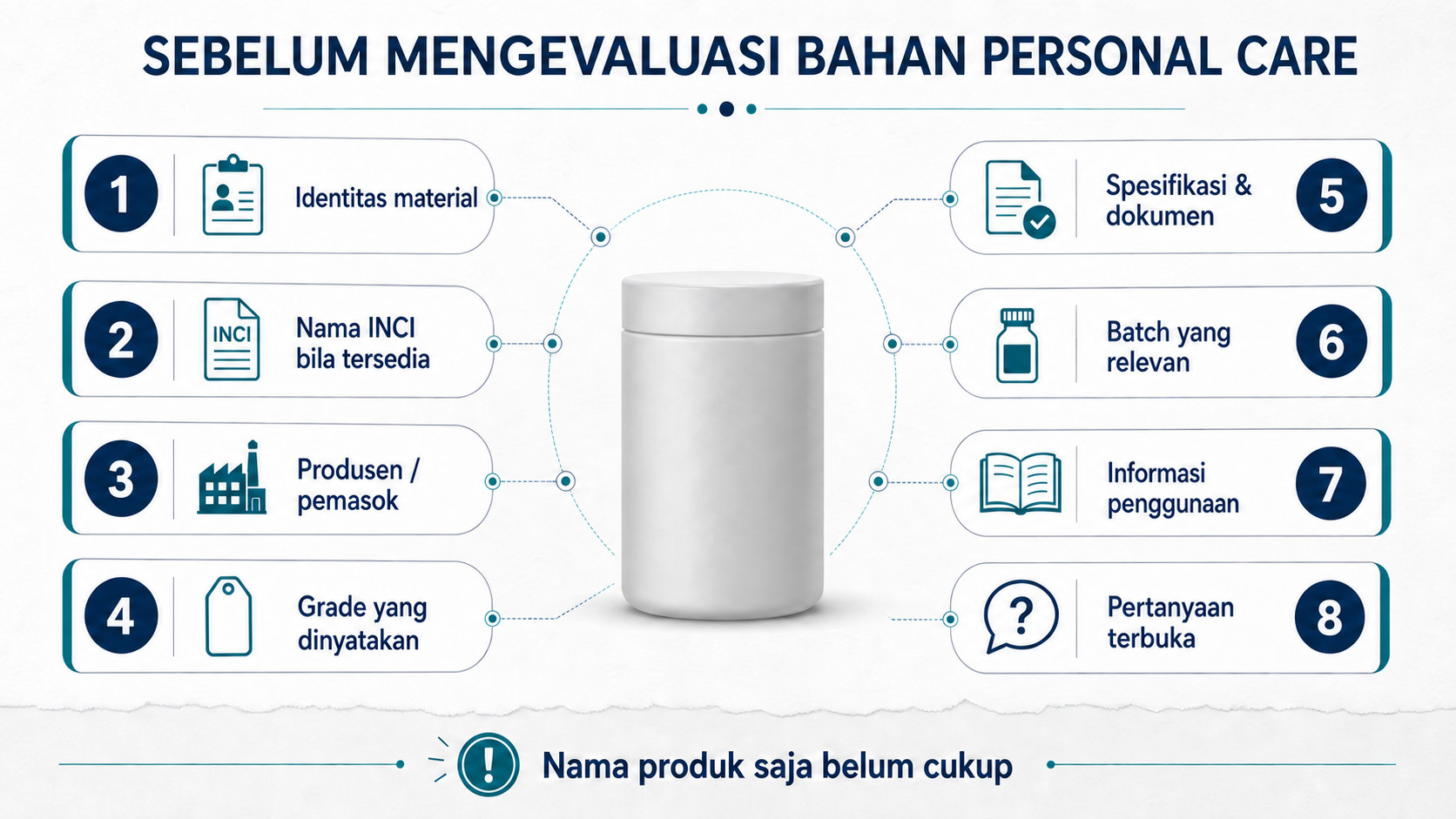
1. Material identity
Start with the ingredient or product name stated in the actual source. Record forms or distinguishing features supported by the label or documents, without adding interpretations.
2. INCI name or recognised nomenclature
Where available and relevant, an INCI or recognised ingredient name can assist identification. However, a name in a list or database does not in itself establish approval, quality or suitability for use.
3. Manufacturer and supplier
Record who manufactures and supplies the ingredient where that information is available. Different sources can mean different documents, grades, specifications or commercial conditions.
4. Stated grade
Use only the grade actually stated in a relevant source. Do not copy grades from old listings, other products or unverified market names.
Link documents to the correct material

5. Specifications and documents
Check specifications, TDS, SDS, COA or other documents that are actually available and relevant. Each document has a different purpose and scope; no single document replaces the entire evaluation process.
6. Relevant batch
If documents or analysis results relate to a batch, ensure the batch association is clear. Information from another batch must not automatically be treated as representative of the material under evaluation.
7. Intended-use information
Manufacturer or supplier intended-use information can help explain material context. It must still be read together with identity, documents, formulation, process and relevant requirements.
8. Open questions
Record what is unknown: manufacturer, grade, specifications, documents, batch or use context. Clear questions are safer than filling gaps with assumptions.
Before a candidate enters a trial
- Confirm the actual material being discussed.
- Match the label, source and documents.
- Separate verified facts from unsupported claims.
- Define the evaluation questions.
- Use a controlled trial and record the results.
This article states no regulatory approval, cosmetic-use permission, grade, safety, compatibility or suitability for a particular product.
General references
The explanation of ingredient naming refers toEuropean Commission CosIng GlossaryandFDA Cosmetics Labeling. CosIng emphasises that its ingredient-name glossary is not a list of ingredients approved for use.
Translated text from article illustrations
The text below corresponds to the original artwork. It does not confer additional formulation, use or safety approval. Read it with the scope limits in the article.
Text in illustration 1
Before evaluating personal care ingredients. 1 Material identity; 2 INCI name where available; 3 Manufacturer/supplier; 4 Stated grade; 5 Specifications and documents; 6 Relevant batch; 7 Use information; 8 Open questions. A product name alone is insufficient.