 by CMID
Technical correction to the original illustration
Scope correction to the image: the thermoset comparison here concerns curing epoxy systems and crosslinkable unsaturated polyester, not the entire polyester family. BASF also documents thermoplastic polyester PBT. Adhesion, heat/chemical resistance or epoxy superiority over polyester is not established without comparable grades, substrates, cure conditions and test methods. Manufacturer resin documents apply to the named products, not all resins. The historical image and comparison are retained; this note limits the classification and suspends unsupported performance rankings.
BASF-hosted technical article·TotalBoat Polyester Resin Instruction Sheet and TDS·WEST SYSTEM User Manual, chemistry / dispensing / product selection
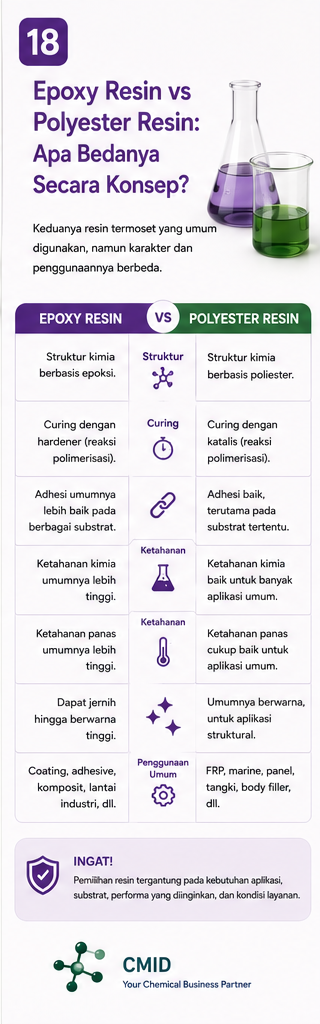
Epoxy and polyester resins belong to different resin families. Their different chemistries and curing systems mean they must not be treated as the same material.
What should be compared?
Selection should consider the intended application, substrate, required performance, processing system and technical data from the supplier or manufacturer.
No universal winner
One resin family is not automatically stronger or better for every requirement. Compare actual materials using appropriate methods and comparable evaluation bases.
Key takeaway:choose according to system requirements and technical evidence, rather than the resin-family name alone.
This article provides no numerical performance comparison or claims of universal superiority.
Translated text from article illustrations
The text below corresponds to the original artwork. It does not confer additional formulation, use or safety approval. Read it with the scope limits in the article.
Text in illustration 1
Epoxy resin versus polyester resin: what is the conceptual difference? Both are commonly used thermosetting resins, but their characteristics and uses differ.
Structure: epoxy resin is epoxy-based; polyester resin is polyester-based. Curing: epoxy with a hardener (polymerisation reaction); polyester with a catalyst (polymerisation reaction).
Adhesion: epoxy is generally better on various substrates; polyester is good particularly on certain substrates. Chemical resistance: epoxy is generally higher; polyester is good for many general applications. Heat resistance: epoxy is generally higher; polyester is reasonably good for general applications.
Clarity: epoxy can range from clear to coloured; polyester is generally coloured, for structural applications. Common epoxy uses: coatings, adhesives, composites, industrial flooring and others. Common polyester uses: FRP, marine, panels, tanks, body filler and others. Remember: resin selection depends on application requirements, substrate, desired performance and service conditions.